
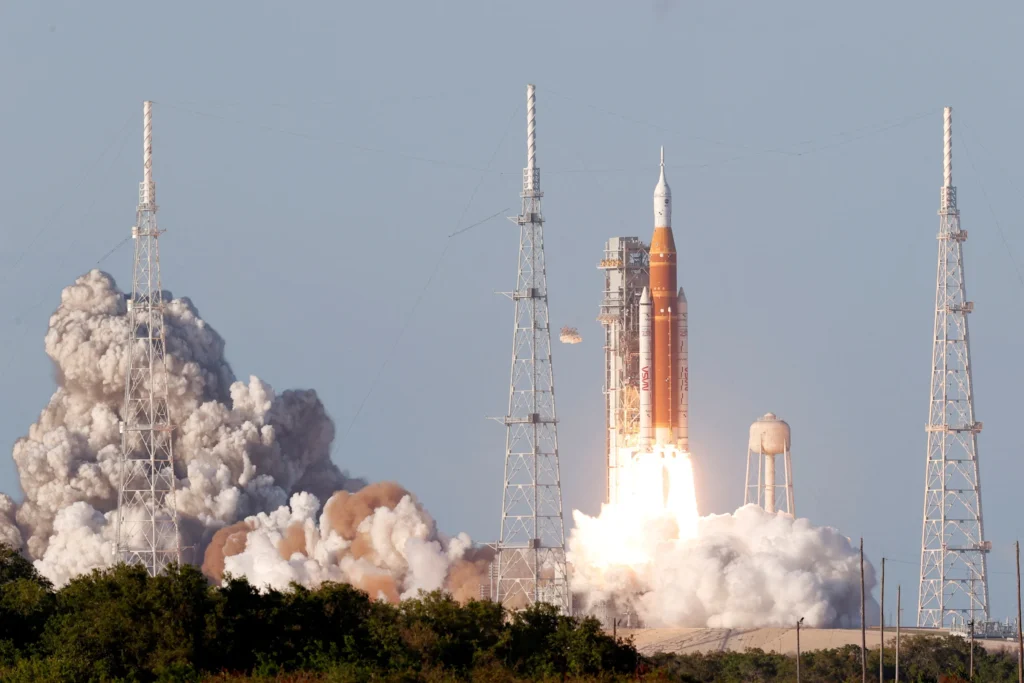
Sergio Cayuela, Kennedy Space Center, Cape Canaveral, Florida (REUTERS/Joe Skipper)
The Artemis II mission represents the first crewed flight of the Artemis Program and a key step toward establishing a sustained human presence beyond low Earth orbit.
More than five decades after the Apollo Program, lunar exploration is entering a new phase focused on operational continuity and the development of long-term infrastructure. Artemis II will serve as the first crewed validation of this new architecture, designed to enable sustained missions in the lunar environment.
The mission will consist of a crewed flight around the Moon without landing, aimed at verifying the performance of critical systems under real deep-space conditions. Key areas of evaluation include life support systems, translunar navigation, communications, and safety procedures.
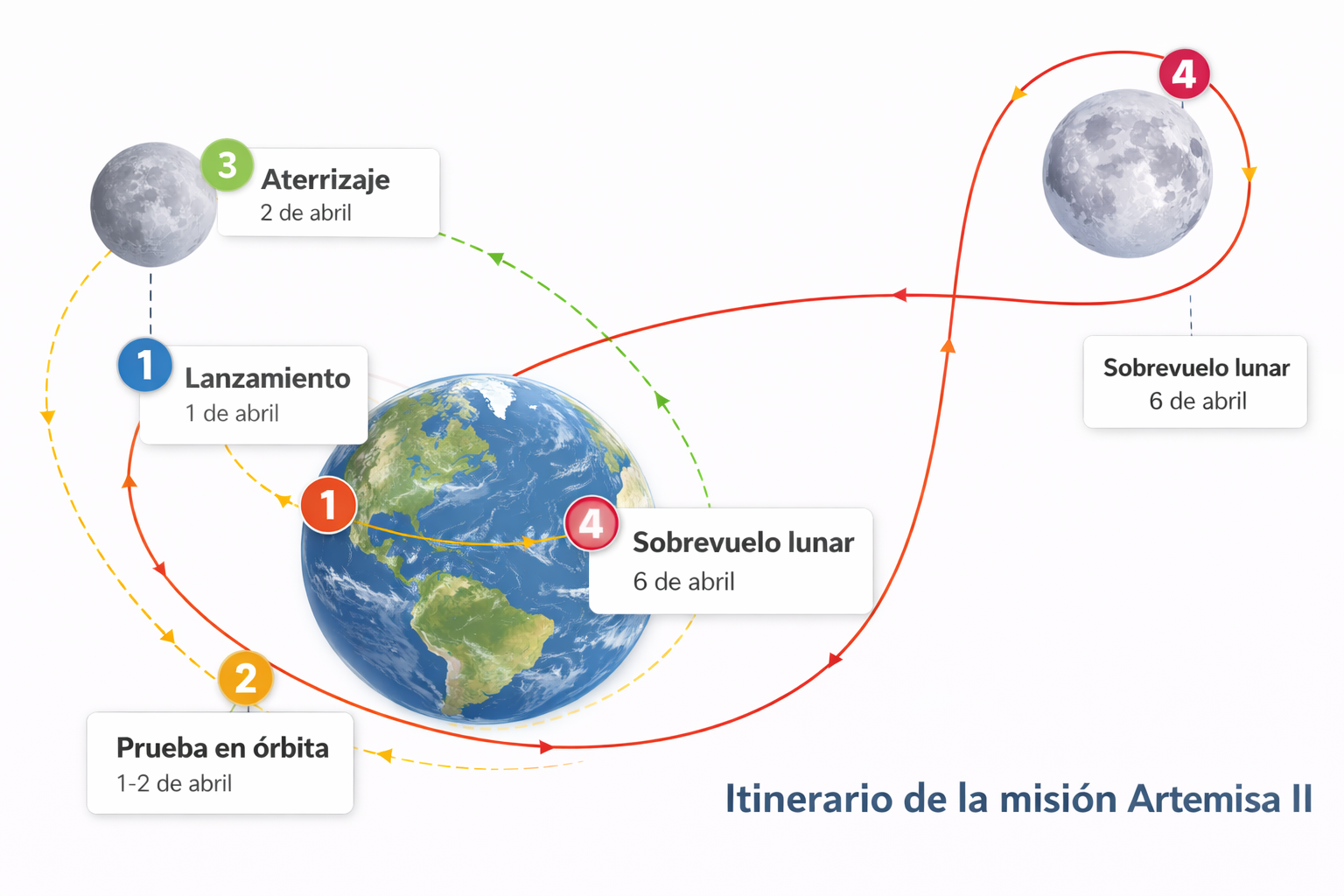
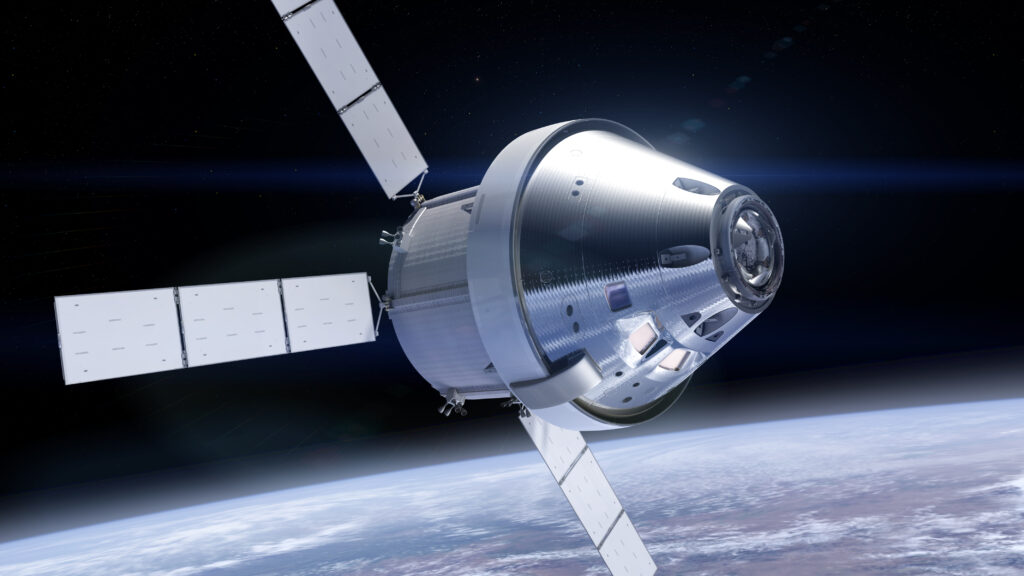
To achieve this, NASA will use the Space Launch System together with the Orion spacecraft, two fundamental elements of the next generation of space exploration systems. Their integration will validate the capability for human transportation beyond low Earth orbit.
The Artemis Program is built on an international cooperation model involving multiple agencies and industrial partners. In this context, the European Space Agency (ESA) contributes key systems, reinforcing a global approach to space exploration.
Within this ecosystem, Spanish engineer Carlos García Galán plays a role in the design of future habitable lunar infrastructures. His work aligns with the program’s medium-term objectives of developing modules that will enable a continuous human presence on the Moon in the coming decade.
The Moon is thus positioned as a strategic environment for validating critical technologies, including long-duration life support systems, in-situ resource utilization, and autonomous energy infrastructures. These developments will be essential for future crewed missions to Mars.
With Artemis II, space exploration enters a phase focused not only on reaching new destinations, but on developing the capabilities required to remain and operate sustainably beyond Earth.