Sergio Cayuela · Castellón, Spain
Artificial intelligence has just reached a new milestone in space. The geospatial foundation model Prithvi, developed by NASA and IBM, has been successfully deployed in orbit to analyze information directly aboard space-based platforms.
At first glance, the news appears to be about artificial intelligence. However, the real breakthrough goes far beyond AI itself.
For decades, satellites have been observing our planet, collecting vast amounts of data that were later transmitted to ground stations for processing. The intelligence was on Earth.
For the first time, part of that analysis is beginning to take place where the data is generated: in orbit.
Trained on more than thirteen years of observations from NASA’s Landsat missions and ESA’s Sentinel satellites, Prithvi can identify floods, wildfires, environmental changes, and other phenomena of interest without having to wait for all the information to be transmitted back to Earth for processing.
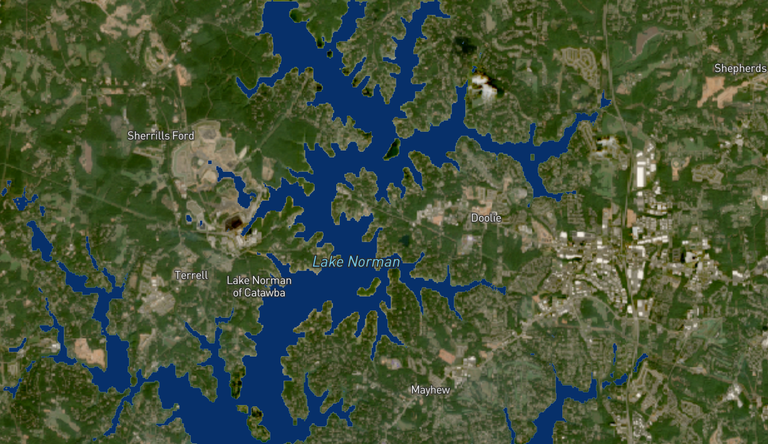
NASA image. The blue areas show flooded regions automatically identified by the Prithvi AI model following Hurricane Helene.
The implications are enormous. In situations such as wildfires, floods, or natural disasters, every minute counts. The ability to analyze information directly in space can accelerate emergency response efforts and improve decision-making when it matters most.
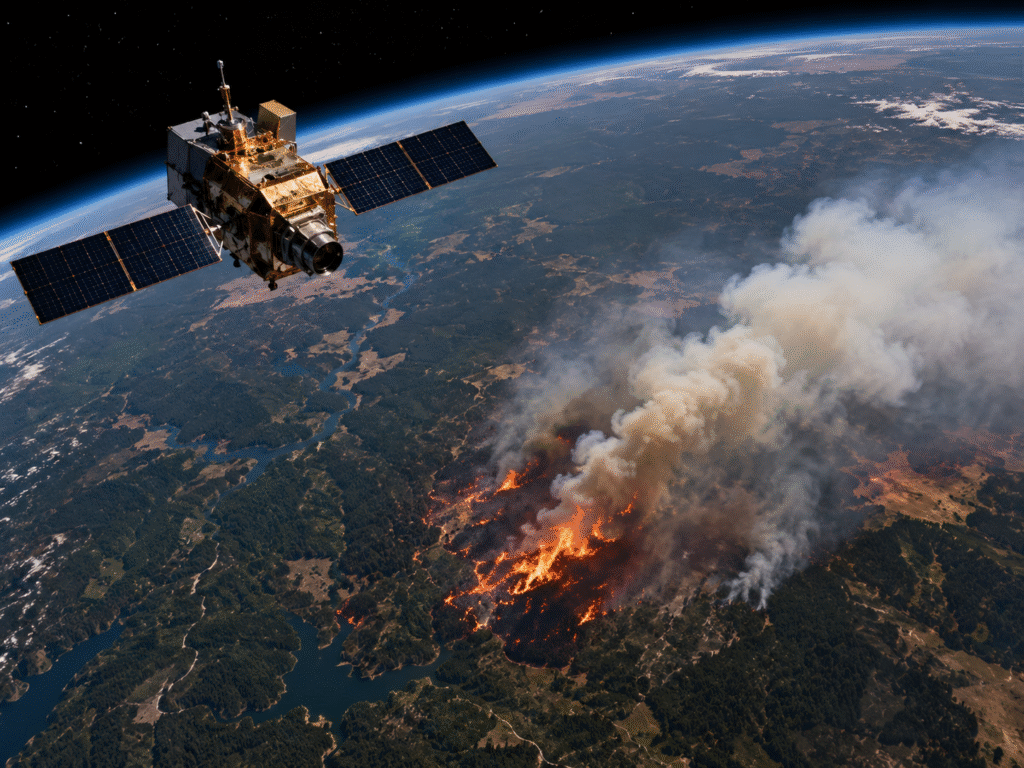
As satellites become more intelligent, the space environment is becoming increasingly complex. The growing amount of space debris forces many missions to perform collision-avoidance maneuvers, consuming fuel and reducing operational lifetimes. Paradoxically, some of the infrastructures that help protect our planet also need protection themselves.
The deployment of foundation models such as Prithvi marks the beginning of a new generation of more autonomous space systems, capable of better understanding what they observe and transforming data into actionable knowledge with unprecedented speed.
Until now, satellites have been observing our planet. Now, they are beginning to understand what they see.