
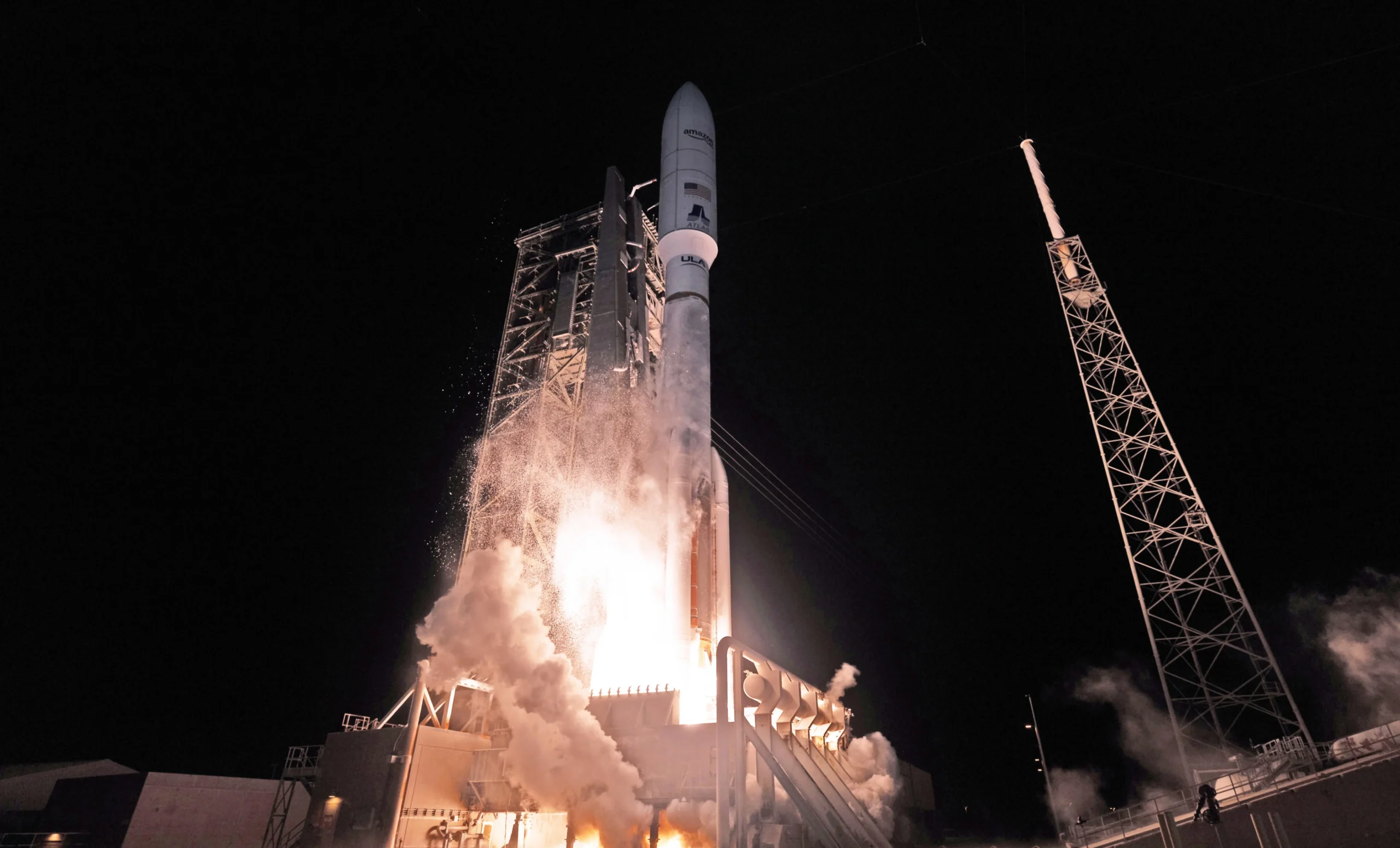
Internet connectivity on Earth, communications for space missions, and sustainability in orbit. Amazon Leo, Amazon’s satellite network, brings together these three dimensions: it aims to provide broadband, participates in a NASA programme to demonstrate the transmission of scientific data through laser links, and has signed the Zero Debris Charter, an initiative facilitated by the European Space Agency (ESA) to reduce the generation of space debris.
Previously known as Project Kuiper, the project has reached the milestone of 1,000 satellites manufactured and is preparing to introduce its commercial service to compete with Starlink. Its deployment illustrates how new communications networks can connect homes and businesses, support future scientific missions, and address the challenge of maintaining a safe orbital environment.
One Thousand Satellites Manufactured: What This Milestone Means
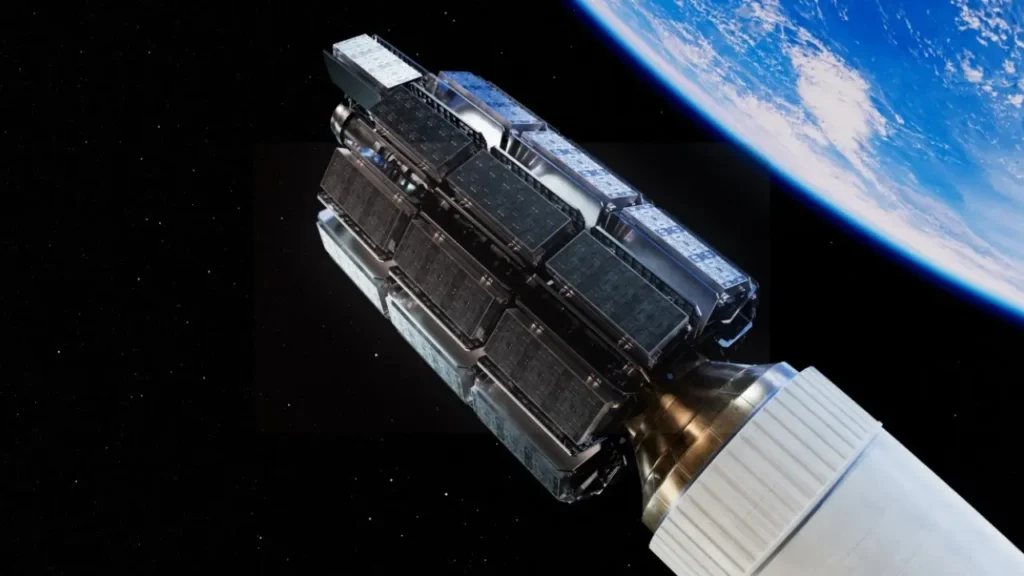
Amazon has announced the manufacture of its 1,000th satellite. This is an industrial milestone, although it does not mean that all of them are already in space.
The company’s official launch record lists 396 satellites deployed following the mission on July 2, 2026. Satellites manufactured but awaiting launch will join the constellation through subsequent missions.
Commissioning involves several stages. After separating from the rocket, satellites undergo checks, move into their assigned orbits, and become integrated into the constellation’s operations.
Amazon began full-scale deployment in April 2025. Since then, it has combined manufacturing and launches with the development of the ground stations and antennas needed to provide connectivity.
How Internet Connectivity Will Reach Users
With a fibre-optic connection, data reaches a building through a cable. With Amazon Leo, an outdoor antenna communicates with satellites and connects to a router. Inside a home or business, devices can use Wi-Fi as usual.
The network also requires ground stations that connect the space-based system to the internet. Satellites, antennas, and ground stations work together to transport data.
Amazon Leo satellites are designed to operate at altitudes between 590 and 630 kilometres. Their proximity to Earth reduces signal travel time compared with traditional geostationary satellites, which matters for video calls and other applications requiring a quick response.
The project aims to expand connectivity, particularly where terrestrial networks do not provide adequate service. Its initial constellation is planned to include more than 3,000 satellites.
NASA’s Role: Connecting Space Missions Too
Amazon Leo’s relationship with NASA is directly linked to the capabilities of its network.
In 2022, the agency awarded $67 million to Kuiper Government Solutions, the Amazon entity participating in its commercial communications demonstration programme. The objective is to demonstrate how the constellation can transmit data from space missions through optical links, which use laser light.
The concept is for a spacecraft to send information to Amazon’s network, which would then relay it to Earth. Infrastructure intended to provide connectivity could also deliver communications services for scientific missions.
SpaceX participates in the same programme through Starlink. NASA is evaluating solutions from different commercial providers for its future communications needs. The agency funds these demonstrations, while the companies retain responsibility for their respective constellations.
The Connection with the European Space Agency (ESA)
The growth of these networks raises another question: how to deploy and operate thousands of satellites while reducing risks to other missions.
In June 2024, Project Kuiper, now Amazon Leo, signed the Zero Debris Charter, an initiative facilitated by the European Space Agency (ESA). It brings together organisations committed to reducing the generation of space debris and improving the safety and sustainability of operations.
This commitment concerns the same constellation that Amazon is deploying. It is a voluntary commitment to orbital sustainability objectives. It is not an agreement for ESA to build, launch, or certify the satellites.
This dimension highlights a responsibility that accompanies the sector’s growth: expanding communications while preserving the orbits used by satellites and scientific missions.
Who Takes the Satellites into Space?
Amazon develops the network and contracts launch providers. These include United Launch Alliance (ULA), Arianespace, Blue Origin, and SpaceX.
Blue Origin, also founded by Jeff Bezos, is a company independent of Amazon. Its New Glenn rocket is among the launch vehicles contracted to deploy the constellation.
Arianespace provides the European Ariane 6 launcher, which has already carried Amazon Leo satellites into orbit from French Guiana. SpaceX has also conducted launches using Falcon 9: the company operating Starlink provides services to deploy its competitor’s network.
The constellation therefore illustrates how commercial competition can coexist with collaboration between specialist companies.
When Is the Service Expected?
Amazon plans to expand the availability of Amazon Leo during 2026 as it adds satellites and increases network coverage and capacity. Its official mission record places the initial commercial rollout within this year.
Availability will be gradual. This schedule does not establish a date for general access across all European countries or in Spain.
The next stage will be to turn this infrastructure into an everyday service. Its progress will be measured through coverage, service terms, and the quality of connectivity users receive.
Amazon Leo shows how commercial communications and the needs of space missions can share technology. At the same time, it reminds us that improving connectivity on Earth requires care for the space surrounding it.
Sources: Amazon, NASA, European Space Agency (ESA).