
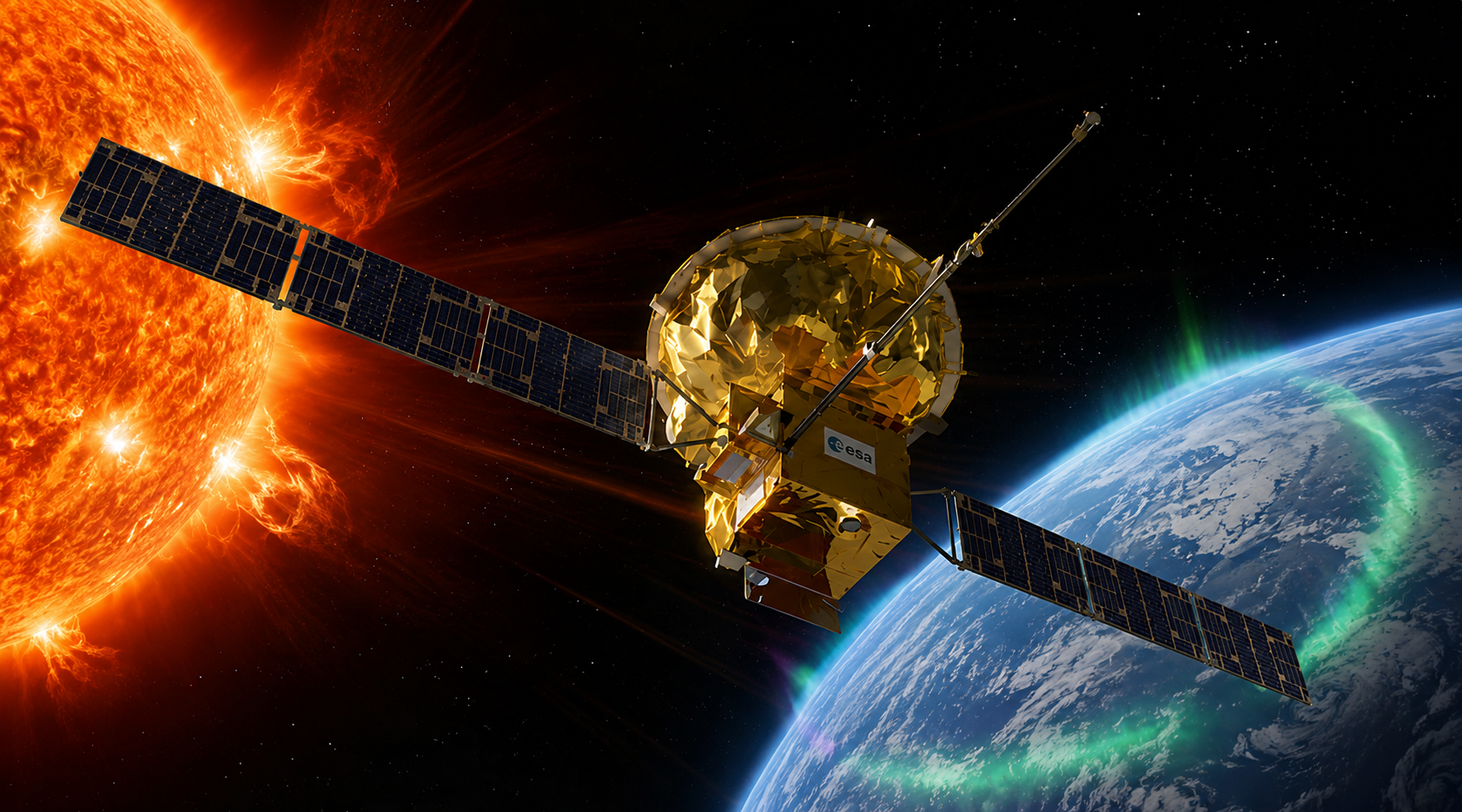
The European Space Agency (ESA) has successfully launched the SMILE mission from the Kourou spaceport in French Guiana.
The mission carries major strategic importance as it will study how solar storms and the solar wind interact with Earth’s magnetosphere — a key phenomenon for understanding and protecting modern critical infrastructures.
Although they often go unnoticed, solar storms can affect satellites, GPS systems, communications, aviation, power grids, maritime navigation, and even military and defense infrastructures. In an increasingly technology- and space-dependent world, understanding what is known as Space Weather has become an international priority.
For the first time, SMILE will enable a global and simultaneous observation of how energy coming from the Sun impacts Earth’s magnetic environment. Thanks to its advanced scientific instruments, the mission will help improve the prediction of extreme solar events and contribute to the development of more resilient systems against these natural threats.
The mission also reflects the growing importance of space weather within Europe’s broader strategy for technological security, space sustainability, and the protection of critical infrastructures.
This launch comes at a particularly relevant moment for both Europe and Spain, where interest in Space Weather continues to grow. In the coming weeks, the European Space Agency (ESA) and the Spanish Space Agency will host the “Space Weather Days for Spain” event in Madrid, bringing together scientists, industry leaders, institutions, and technology stakeholders to discuss national capabilities, strategic needs, and future coordination efforts related to space weather.
Credits: ESA / ATG Europe