
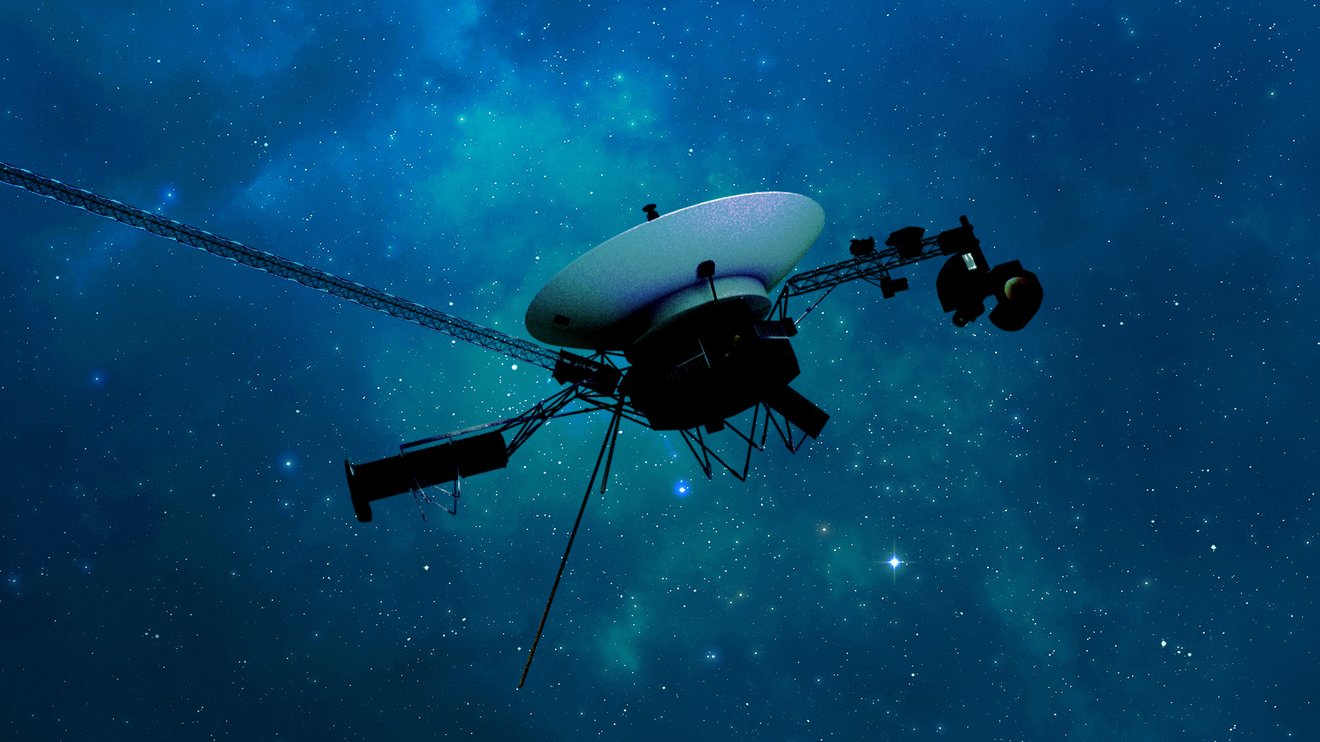
In 1977, NASA launched two twin spacecraft: Voyager 1 and Voyager 2. They departed just days apart but followed different paths.
Voyager 2 visited Jupiter, Saturn, Uranus, and Neptune. Its twin, Voyager 1, took a faster route and is now the farthest human-made object in history.
During its mission, Voyager 1 discovered active volcanoes on one of Jupiter’s moons, as well as new moons and rings.
Almost 50 years later, it is still operating with a digital tape recorder, a memory capacity three million times smaller than that of a modern smartphone, and a transmission speed 38,000 times slower than a 5G connection.
It is currently almost 26 billion kilometres from Earth. On 18 November 2026, it will be one light-day away, meaning that any signal it sends will take 24 hours to reach us.
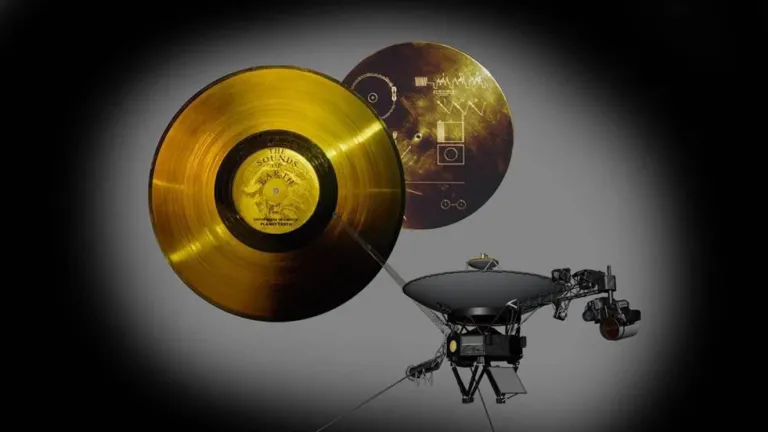
When it eventually stops working, it will continue travelling through the galaxy carrying its Golden Record—a message containing images, sounds, and music from Earth.
Two twin spacecraft set out to explore the planets. One of them ultimately became the farthest human-made object in history.
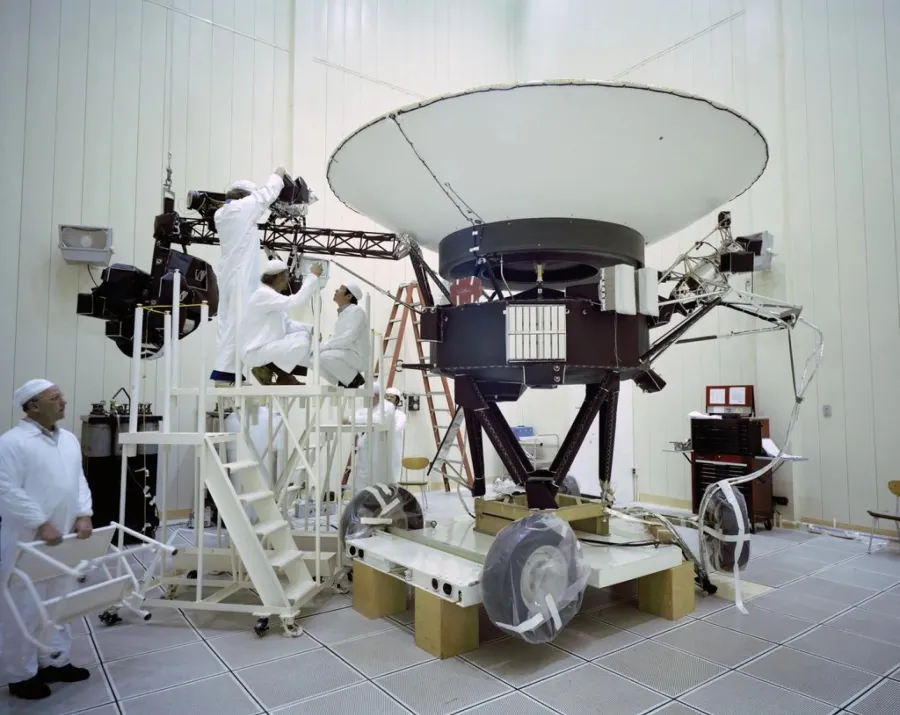
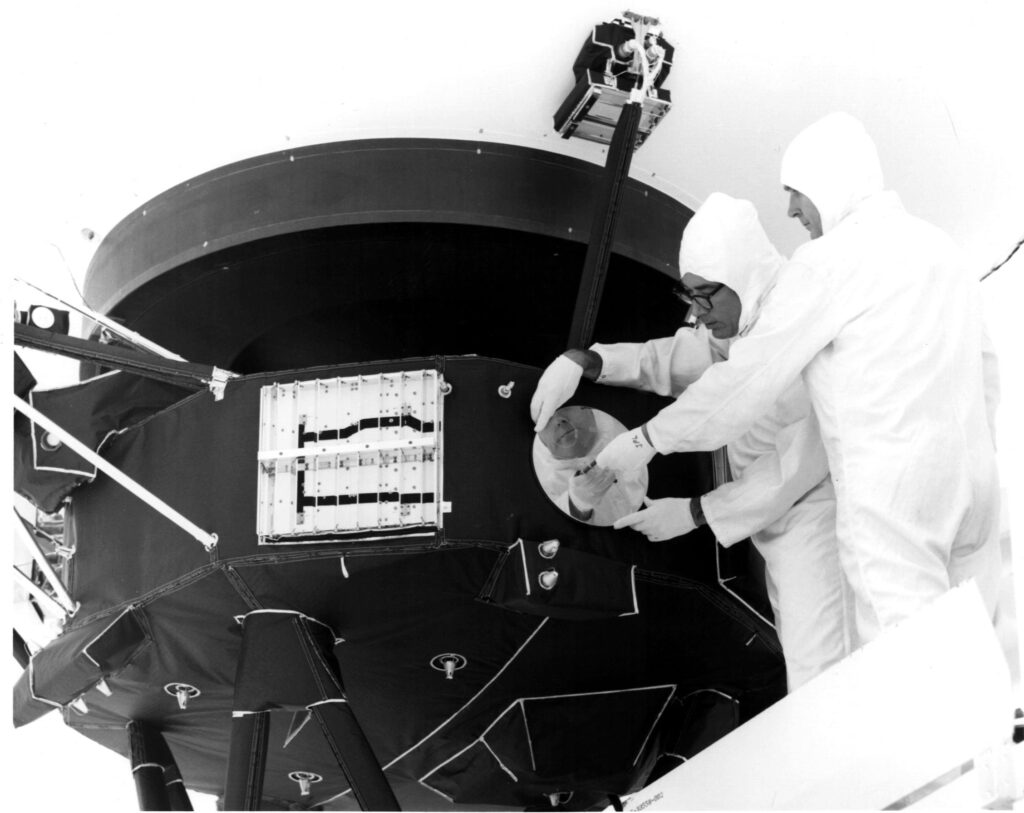
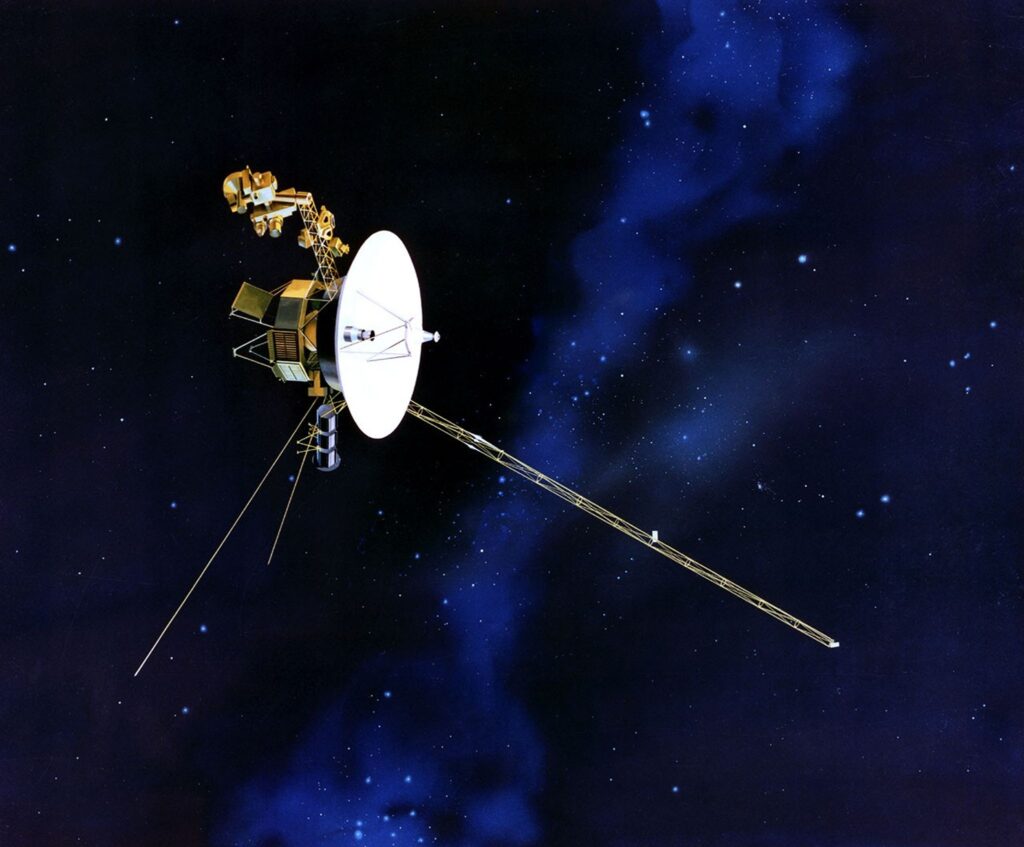
NASA Photos